Starting today, Amazon Elastic Compute Cloud (Amazon EC2) R7g instances are available in the AWS GovCloud (US-East) Region. These instances are powered by AWS Graviton3 processors that provide up to 25% better compute performance compared to AWS Graviton2 processors, and built on top of the the AWS Nitro System, a collection of AWS designed innovations that deliver efficient, flexible, and secure cloud services with isolated multi-tenancy, private networking, and fast local storage.
Amazon EC2 Graviton3 instances also use up to 60% less energy to reduce your cloud carbon footprint for the same performance than comparable EC2 instances. For increased scalability, these instances are available in 9 different instance sizes, including bare metal, and offer up to 30 Gbps networking bandwidth and up to 20 Gbps of bandwidth to the Amazon Elastic Block Store (EBS).
Starting today, Amazon Elastic Compute Cloud (Amazon EC2) R7g instances are available in the AWS GovCloud (US-East) Region. These instances are powered by AWS Graviton3 processors that provide up to 25% better compute performance compared to AWS Graviton2 processors, and built on top of the the AWS Nitro System, a collection of AWS designed innovations that deliver efficient, flexible, and secure cloud services with isolated multi-tenancy, private networking, and fast local storage. Amazon EC2 Graviton3 instances also use up to 60% less energy to reduce your cloud carbon footprint for the same performance than comparable EC2 instances. For increased scalability, these instances are available in 9 different instance sizes, including bare metal, and offer up to 30 Gbps networking bandwidth and up to 20 Gbps of bandwidth to the Amazon Elastic Block Store (EBS). To learn more, see Amazon EC2 R7g. To explore how to migrate your workloads to Graviton-based instances, see AWS Graviton Fast Start program and Porting Advisor for Graviton. To get started, see the AWS GovCloud (US) Console.
Amazon SageMaker Catalog, part of the next generation of SageMaker, now supports authorization policies for asset type (template) usage — a new governance capability that gives organizations fine-grained control over who can create and manage custom assets using specific asset type. In large enterprises, teams often define business specific asset templates (such as ClinicalStudyAsset or FinancialReportAsset) to standardize how data is structured, cataloged for discovery, and governed across the organization.
With this authorization policy-based control, organizations can enforce usage boundaries, allowing administrators to restrict the use of sensitive or proprietary templates to only authorized projects and users. For example, a life sciences organization admin can ensure that only R&D teams can use ClinicalStudyAsset asset types to publish clinical trial datasets, while a financial services firm can limit FinancialReportAsset asset types to audit or compliance teams. This streamlines asset creation while reducing duplication, preventing mismanagement, and maintaining governance boundaries across business units—ensuring that sensitive templates are used only by the right users in a secure and compliant manner.
Learn more about how to assign authorization policies to asset types in our product documentation.
Amazon SageMaker Catalog, part of the next generation of SageMaker, now supports authorization policies for asset type (template) usage — a new governance capability that gives organizations fine-grained control over who can create and manage custom assets using specific asset type. In large enterprises, teams often define business specific asset templates (such as ClinicalStudyAsset or FinancialReportAsset) to standardize how data is structured, cataloged for discovery, and governed across the organization. With this authorization policy-based control, organizations can enforce usage boundaries, allowing administrators to restrict the use of sensitive or proprietary templates to only authorized projects and users. For example, a life sciences organization admin can ensure that only R&D teams can use ClinicalStudyAsset asset types to publish clinical trial datasets, while a financial services firm can limit FinancialReportAsset asset types to audit or compliance teams. This streamlines asset creation while reducing duplication, preventing mismanagement, and maintaining governance boundaries across business units—ensuring that sensitive templates are used only by the right users in a secure and compliant manner. Learn more about how to assign authorization policies to asset types in our product documentation.
Starting today, memory-optimized Amazon Compute Cloud (Amazon EC2) X2idn instances are available in AWS Israel (Tel Aviv) region. These instances, powered by 3rd generation Intel Xeon Scalable Processors and built with AWS Nitro System, are designed for memory-intensive workloads. They deliver improvements in performance, price performance, and cost per GiB of memory compared to previous generation X1 instances. These instances are SAP-certified for running Business Suite on HANA, SAP S/4HANA, Data Mart Solutions on HANA, Business Warehouse on HANA, SAP BW/4HANA, and SAP NetWeaver workloads on any database.
To learn more, visit the EC2 X2i Instances Page, or connect with your AWS Support contacts.
Starting today, memory-optimized Amazon Compute Cloud (Amazon EC2) X2idn instances are available in AWS Israel (Tel Aviv) region. These instances, powered by 3rd generation Intel Xeon Scalable Processors and built with AWS Nitro System, are designed for memory-intensive workloads. They deliver improvements in performance, price performance, and cost per GiB of memory compared to previous generation X1 instances. These instances are SAP-certified for running Business Suite on HANA, SAP S/4HANA, Data Mart Solutions on HANA, Business Warehouse on HANA, SAP BW/4HANA, and SAP NetWeaver workloads on any database. To learn more, visit the EC2 X2i Instances Page, or connect with your AWS Support contacts.
Amazon CloudWatch Network Monitoring now allows you to monitor network performance of your AWS workloads that span multiple accounts by using flow monitors. Flow monitors provide near real-time visibility of network performance for workloads between compute instances such as Amazon EC2 and Amazon EKS, and AWS services such as Amazon S3, Amazon RDS, and Amazon DynamoDB, enabling you to rapidly detect and attribute network-driven impairments for your workloads. By integrating with AWS Organizations, flow monitors now allow you to monitor network performance of your AWS workloads that span multiple accounts.
Multi-account support enables a unified onboarding experience so that you as a network administrator can enable flow monitors across all accounts that own the different resources that need to be monitored. As a result, you get visibility of network paths for workloads that cross multiple accounts. With multi-account support for flow monitors, you also get a unified view of network performance metrics for flows that span multiple accounts.
For the full list of AWS Regions where Network Monitoring for AWS workloads is available, visit the Regions list. To learn more, visit the Amazon CloudWatch Network Monitoring documentation.
Amazon CloudWatch Network Monitoring now allows you to monitor network performance of your AWS workloads that span multiple accounts by using flow monitors. Flow monitors provide near real-time visibility of network performance for workloads between compute instances such as Amazon EC2 and Amazon EKS, and AWS services such as Amazon S3, Amazon RDS, and Amazon DynamoDB, enabling you to rapidly detect and attribute network-driven impairments for your workloads. By integrating with AWS Organizations, flow monitors now allow you to monitor network performance of your AWS workloads that span multiple accounts. Multi-account support enables a unified onboarding experience so that you as a network administrator can enable flow monitors across all accounts that own the different resources that need to be monitored. As a result, you get visibility of network paths for workloads that cross multiple accounts. With multi-account support for flow monitors, you also get a unified view of network performance metrics for flows that span multiple accounts. For the full list of AWS Regions where Network Monitoring for AWS workloads is available, visit the Regions list. To learn more, visit the Amazon CloudWatch Network Monitoring documentation.
Today, we are announcing the general availability of AWS Wavelength in partnership with Verizon in Lenexa, Kansas. AWS Wavelength Zone enables customers to run applications using AWS infrastructure and services in AWS telco partners’ data centers, addressing critical needs for low latency, data residency, and application resiliency across a wide range of industries.
With this expansion, AWS Wavelength Zone now offers low-latency, local compute, storage, networking, and other building block services for edge computing to customers in the Lenexa metropolitan area. This is particularly valuable for industries with strict regulatory compliance needs, such as financial services, healthcare, government sectors, and Sports Betting and Gaming customers.
The new AWS Wavelength Zone in the AWS US East (N. Virginia) Region expands AWS’s edge computing capabilities, offering customers in the region enhanced options for data localization and application resilience. By integrating seamlessly with Amazon EC2, EBS, ALB, VPC, Data Transfer and other AWS services, Wavelength Zones allow developers to easily extend their applications to the edge, ensuring data remains within specified geographical boundaries while maintaining high performance and reliability. This expansion addresses the growing need for edge computing solutions that can handle diverse workloads while meeting complex regulatory and operational requirements.
Today, we are announcing the general availability of AWS Wavelength in partnership with Verizon in Lenexa, Kansas. AWS Wavelength Zone enables customers to run applications using AWS infrastructure and services in AWS telco partners’ data centers, addressing critical needs for low latency, data residency, and application resiliency across a wide range of industries. With this expansion, AWS Wavelength Zone now offers low-latency, local compute, storage, networking, and other building block services for edge computing to customers in the Lenexa metropolitan area. This is particularly valuable for industries with strict regulatory compliance needs, such as financial services, healthcare, government sectors, and Sports Betting and Gaming customers. The new AWS Wavelength Zone in the AWS US East (N. Virginia) Region expands AWS’s edge computing capabilities, offering customers in the region enhanced options for data localization and application resilience. By integrating seamlessly with Amazon EC2, EBS, ALB, VPC, Data Transfer and other AWS services, Wavelength Zones allow developers to easily extend their applications to the edge, ensuring data remains within specified geographical boundaries while maintaining high performance and reliability. This expansion addresses the growing need for edge computing solutions that can handle diverse workloads while meeting complex regulatory and operational requirements. Learn more about AWS Wavelength and get started today.
Starting today, Amazon Elastic Compute Cloud (Amazon EC2) P5en instances powered by NVIDIA H200 GPUs are available in the AWS US West (N. California) Region. These instances are optimized for generative AI and high performance computing (HPC) applications.
P5en instances feature 8 H200 GPUs which have 1.7x GPU memory size and 1.4x GPU memory bandwidth than H100 GPUs featured in P5 instances. P5en instances pair the H200 GPUs with high performance custom 4th Generation Intel Xeon Scalable processors, enabling Gen5 PCIe between CPU and GPU which provides up to 4x the bandwidth between CPU and GPU and boosts AI training and inference performance. P5en, with up to 3200 Gbps of third generation of EFA using Nitro v5, shows up to 35% improvement in latency compared to P5 that uses the previous generation of EFA and Nitro. This helps improve collective communications performance for distributed training workloads such as deep learning, generative AI, real-time data processing, and high-performance computing (HPC) applications. To address customer needs for large scale at low latency, P5en instances are deployed in Amazon EC2 UltraClusters, and provide market-leading scale-out capabilities for distributed training and tightly coupled HPC workloads.
Starting today, Amazon Elastic Compute Cloud (Amazon EC2) P5en instances powered by NVIDIA H200 GPUs are available in the AWS US West (N. California) Region. These instances are optimized for generative AI and high performance computing (HPC) applications. P5en instances feature 8 H200 GPUs which have 1.7x GPU memory size and 1.4x GPU memory bandwidth than H100 GPUs featured in P5 instances. P5en instances pair the H200 GPUs with high performance custom 4th Generation Intel Xeon Scalable processors, enabling Gen5 PCIe between CPU and GPU which provides up to 4x the bandwidth between CPU and GPU and boosts AI training and inference performance. P5en, with up to 3200 Gbps of third generation of EFA using Nitro v5, shows up to 35% improvement in latency compared to P5 that uses the previous generation of EFA and Nitro. This helps improve collective communications performance for distributed training workloads such as deep learning, generative AI, real-time data processing, and high-performance computing (HPC) applications. To address customer needs for large scale at low latency, P5en instances are deployed in Amazon EC2 UltraClusters, and provide market-leading scale-out capabilities for distributed training and tightly coupled HPC workloads. To learn more about P5en instances, see Amazon EC2 P5en Instances.
Amazon Relational Database Service (RDS) for Oracle now supports version 24.2 of Oracle Application Express (APEX) for 19c and 21c versions of Oracle Database. Oracle APEX is a low-code development platform that enables developers to build applications entirely within their web browser. To learn more about the latest features of APEX 24.2, please refer to Oracle’s documentation.
For more details on supported APEX versions and how to add or modify APEX options for your RDS for Oracle database, please refer to the Amazon RDS for Oracle APEX Documentation.
APEX 24.2 is available in all AWS regions where Amazon RDS for Oracle is available. See Amazon RDS for Oracle Pricing for pricing details and regional availability.
Amazon Relational Database Service (RDS) for Oracle now supports version 24.2 of Oracle Application Express (APEX) for 19c and 21c versions of Oracle Database. Oracle APEX is a low-code development platform that enables developers to build applications entirely within their web browser. To learn more about the latest features of APEX 24.2, please refer to Oracle’s documentation. For more details on supported APEX versions and how to add or modify APEX options for your RDS for Oracle database, please refer to the Amazon RDS for Oracle APEX Documentation. APEX 24.2 is available in all AWS regions where Amazon RDS for Oracle is available. See Amazon RDS for Oracle Pricing for pricing details and regional availability.
Amazon Verified Permissions now enables customers to tag Policy Stores. Tags are simple key-value pairs that customers can assign to AWS resources such as Verified Permissions Policy Stores to manage cost-allocate and control access. This launch enables Verified Permissions customers to use tag-based controls to manage access to policy stores. For example, customers can now tag a policy store for a tenant, and use IAM permissions to restrict to that policy store accordingly. Further, customers can use AWS cost allocation tags to categorize and allocate costs by tenant, team, department or application. Lastly, this launch makes it simpler for customers to search for policy stores within the account through the console.
Amazon Verified Permissions is a scalable permissions management and fine-grained authorization service for the applications that you build. Using Cedar, an expressive and analyzable open-source policy language, developers and admins can define policy-based access controls using roles and attributes for more granular, context-aware access control. For example, a multi-tenant SaaS HR application might use Amazon Verified Permissions to manage user access to tenant specific resources, such as performance evaluations and employee benefits packages. In these cases, a separate policy store might be deployed for each tenant.
This feature is available in all regions where Verified permissions is available. For more information visit the product page.
Amazon Verified Permissions now enables customers to tag Policy Stores. Tags are simple key-value pairs that customers can assign to AWS resources such as Verified Permissions Policy Stores to manage cost-allocate and control access. This launch enables Verified Permissions customers to use tag-based controls to manage access to policy stores. For example, customers can now tag a policy store for a tenant, and use IAM permissions to restrict to that policy store accordingly. Further, customers can use AWS cost allocation tags to categorize and allocate costs by tenant, team, department or application. Lastly, this launch makes it simpler for customers to search for policy stores within the account through the console. Amazon Verified Permissions is a scalable permissions management and fine-grained authorization service for the applications that you build. Using Cedar, an expressive and analyzable open-source policy language, developers and admins can define policy-based access controls using roles and attributes for more granular, context-aware access control. For example, a multi-tenant SaaS HR application might use Amazon Verified Permissions to manage user access to tenant specific resources, such as performance evaluations and employee benefits packages. In these cases, a separate policy store might be deployed for each tenant. This feature is available in all regions where Verified permissions is available. For more information visit the product page.
Amazon SageMaker now offers 14 new built-in Visual ETL transforms: “Format timestamp”, “Split string”, “Regex extractor”, “Autobalance processing”, “UUID (Universally Unique Identified)”, “Identifier”, “Unpivot columns into rows”, “Pivot rows into columns”, “Parse JSON column”, “Extract JSON path”, “Lookup”, “Router”, “Select from collection” and “Order By”. With these transforms, ETL developers can quickly build more sophisticated data pipelines without having to write custom code for common transform tasks. Also, Amazon S3 Tables are now supported via the Amazon SageMaker Lakehouse node. Providing you with the flexibility to access and preview data in-place across S3 Tables.
Visual ETL in Amazon SageMaker provides a drag-and-drop interface for building ETL flows and authoring flows with Amazon Q Developer. Each of the new visual ETL transforms address a unique data processing need. For example, use “Identifier” to assign a numeric identifier for each row in the dataset, transform JSON strings with “Parse JSON column” which allows you to covert a JSON string into a data struct or array, or extract just the JSON path you need with “Extract JSON path” transform.
These Visual ETL transforms are now available in all AWS regions where Amazon SageMaker is available. Access the supported region list for the most up-to-date availability information.
To learn more, visit our Amazon SageMaker documentation.
Amazon SageMaker now offers 14 new built-in Visual ETL transforms: “Format timestamp”, “Split string”, “Regex extractor”, “Autobalance processing”, “UUID (Universally Unique Identified)”, “Identifier”, “Unpivot columns into rows”, “Pivot rows into columns”, “Parse JSON column”, “Extract JSON path”, “Lookup”, “Router”, “Select from collection” and “Order By”. With these transforms, ETL developers can quickly build more sophisticated data pipelines without having to write custom code for common transform tasks. Also, Amazon S3 Tables are now supported via the Amazon SageMaker Lakehouse node. Providing you with the flexibility to access and preview data in-place across S3 Tables. Visual ETL in Amazon SageMaker provides a drag-and-drop interface for building ETL flows and authoring flows with Amazon Q Developer. Each of the new visual ETL transforms address a unique data processing need. For example, use “Identifier” to assign a numeric identifier for each row in the dataset, transform JSON strings with “Parse JSON column” which allows you to covert a JSON string into a data struct or array, or extract just the JSON path you need with “Extract JSON path” transform. These Visual ETL transforms are now available in all AWS regions where Amazon SageMaker is available. Access the supported region list for the most up-to-date availability information. To learn more, visit our Amazon SageMaker documentation.
Por: Brett Ostrum, vicepresidente corporativo de Surface.
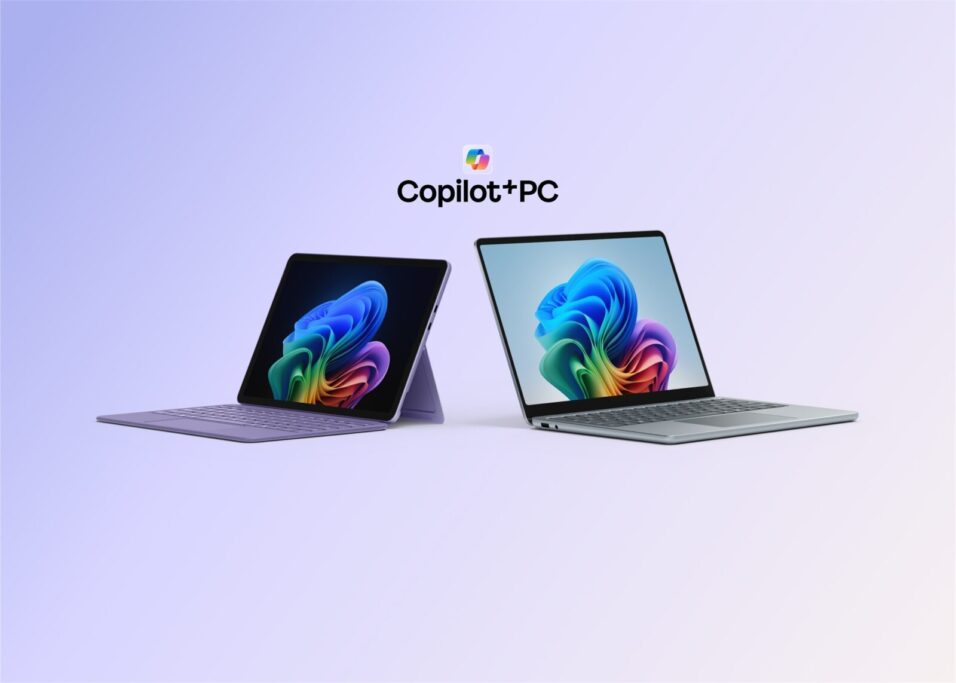
Los PC Copilot+ definen la próxima ola de informática personal: ordenadores rápidos, duraderos y seguros que están diseñados en específico para desbloquear experiencias de IA que nos permiten hacer más. Hoy, Microsoft y Surface amplían la familia de PC Copilot+ con los nuevos Surface Laptop de 13 pulgadas y Surface Pro de 12 pulgadas, diseñados con el rendimiento y la portabilidad en mente. Estos nuevos PC reflejan el siguiente capítulo de la innovación de Surface: llevar los PC Copilot+ ultradelgados, ligeros y potentes a más personas a precios aún más bajos.
En mayo de 2024, introdujimos una nueva categoría de dispositivos— Copilot+ PCs, los PC con Windows más rápidos e inteligentes de la historia, con nuestro buque insignia Surface Laptop y Surface Pro, que representan lo último en PC Copilot+ de Microsoft. Los PC Copilot+ son dispositivos ultrarrápidos y receptivos con una batería de larga duración, construidos para ser seguros por diseño y por defecto, y para desbloquear experiencias exclusivas de IA, que se ejecutan de manera local gracias a la Unidad de Procesamiento Neuronal en sus procesadores avanzados. Windows sigue con las inversiones en PC Copilot+, con un nuevo agente en Configuración y nuevas experiencias de Copilot+ para PC anunciadas hoy— implementándose primero para Windows Insiders. Hoy, estamos orgullosos de presentar dos nuevos PC Surface Copilot+, con tecnología SnapdragoniProcesadores X Plus, que ofrecen grandes experiencias a un gran precio. Ahora ustedes tienen más opciones para elegir el equipo Surface Copilot+ adecuado para sus necesidades.
«Estamos entusiasmados de continuar asociándonos con Microsoft a medida que expandimos el ecosistema de PC Snapdragon Copilot+ para incluir Surface Laptop y Surface Pro. Ambos dispositivos funcionan con Snapdragon X Plus (8 núcleos) y una NPU 45 TOPS, lo que ofrece el rendimiento, la velocidad y la duración de la batería que los clientes esperan, junto con experiencias exclusivas de IA diseñadas para agilizar los flujos de trabajo y ayudar a los usuarios a centrarse en lo que más importa». — Kedar Kondap, vicepresidente sénior y director general de Computación y Juegos de Qualcomm Technologies, Inc.
Presentamos el nuevo Surface Laptop de 13 pulgadas: un PC Copilot+ diseñado para su forma de trabajar y vivir
Disponible a partir del 20 de mayo de 2025, desde $899
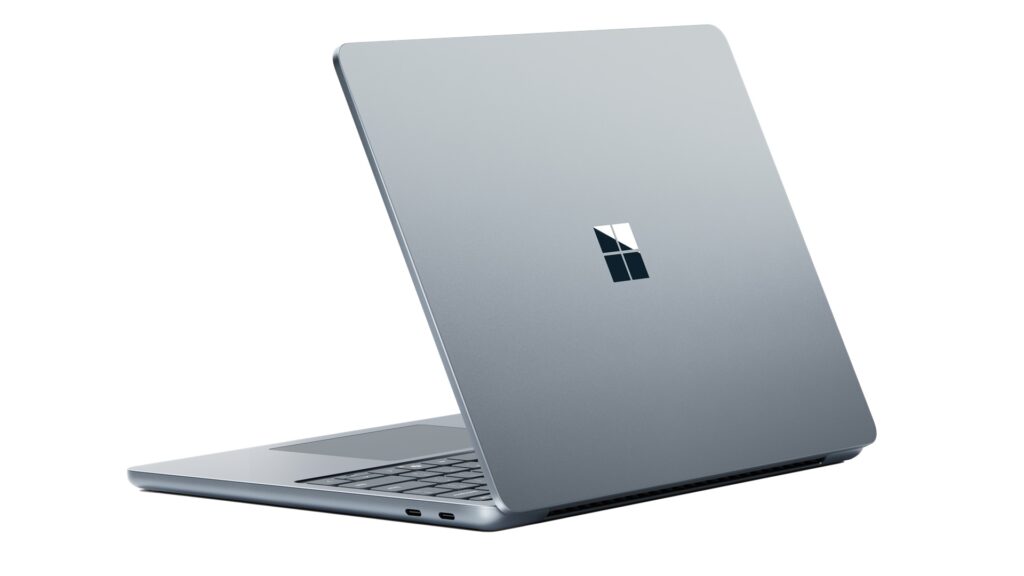
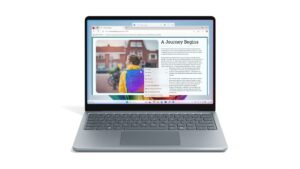
El Surface Laptop de 13 pulgadas es nuestro Surface Laptop más delgado y liviano hasta el momento: diseñado para la portabilidad, diseñado para el rendimiento y mejorado con el poder de la IA. El nuevo Surface Laptop es más pequeño que un portátil estándar, por lo que es fácil de meter en el bolso y llevar a cualquier parte. Cuenta con un chasis de aluminio anodizado de primera calidad y viene en tres impresionantes coloresii: Océano, Violeta y Platino. Para completar el look, pueden emparejar su dispositivo con el Surface Arc Mouse, nuestro mouse más querido y más vendido, que ahora está disponible en color Océano y Violeta a juegoiii.
Impulsado por el procesador Snapdragon X Plus que incluye una NPU integrada de 45 TOPS (billones de operaciones por segundo), el nuevo Surface Laptop es un 50% más rápido que Surface Laptop 5iv y supera al MacBook Air M3v. Es bastante ágil y receptivo, lo que les brinda toda la velocidad que necesitan para hacer más.
El nuevo Surface Laptop ofrece la batería de mayor duración de cualquier Surface, con hasta 23 horas de reproducción de video y hasta 16 horas de navegación web activa, lo que les permite trabajar desde cualquier lugar, sin necesidad de enchufarlovi. Con la carga rápida universal USB-C, nunca ha sido tan fácil mantenerse con energía mientras viajanvii.
La experiencia es elevada en cada detalle. Una vibrante pantalla táctil Full HD de 13 pulgadas está enmarcada por biseles ultradelgados, lo que los atrae ya sea que trabajen, transmitan o creen. La cámara integrada mejorada con IA con Auto Video HDR y reducción de ruido AI garantiza que se vea y suene lo mejor posible en cualquier entorno.
Escribir es silencioso y cómodo, con un teclado diseñado para la productividad durante todo el día. El lector de huellas dactilares integrado en el botón de encendido permite un inicio de sesión seguro y sin problemas, mientras que la nueva tecla Copilot pone el poder de la IA al alcance de su manoviii. Con un panel táctil de precisión personalizable con modo táctil adaptativo, la navegación se siente natural e intuitiva.
Surface ofrece avances en materia de sostenibilidad. El nuevo Surface Laptop contiene un 100% de cobalto reciclado en la celda de la batería y un 100% de metales de tierras raras reciclados en los imanesix. Muchos componentes pueden ser reemplazados por proveedores de servicios autorizados o técnicos calificados, lo que respalda un enfoque circular y más reparable para el diseño de dispositivosx.
Nueva Surface Pro, 12 pulgadas: el PC Copilot+ más delgado y liviano hasta la fecha
Disponible a partir del 20 de mayo de 2025, desde $799
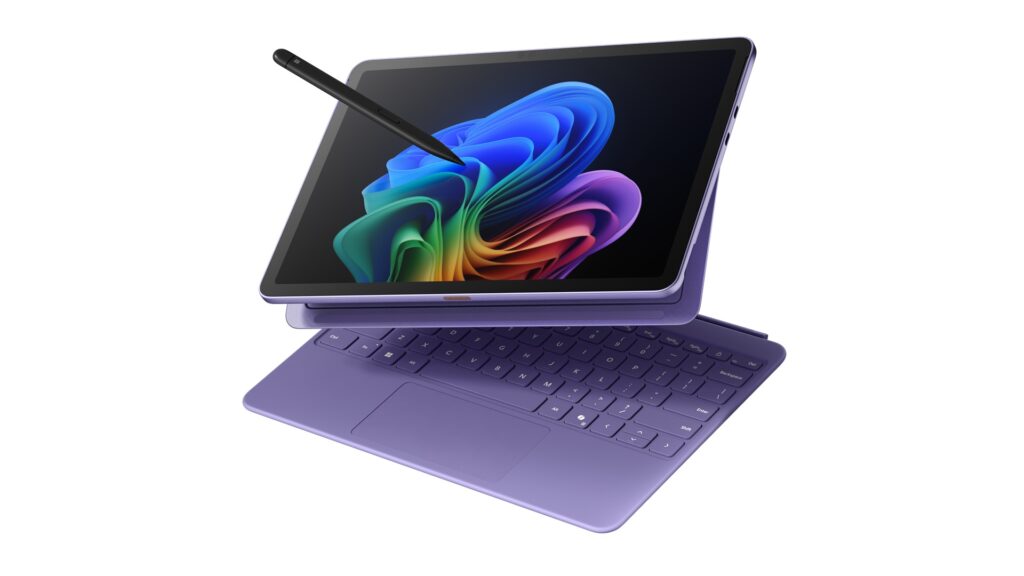
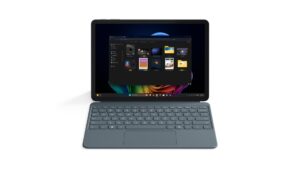
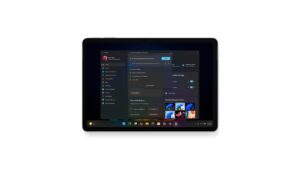
La nueva Surface Pro mantiene la versatilidad icónica del factor de forma 2 en 1, que proporciona la funcionalidad de una computadora portátil y la portabilidad de una tableta, con la ayuda de su soporte ajustable incorporado y teclado desmontable. Surface Slim Pen ahora se conecta de manera magnética a la parte posterior de la tableta para cargarla y almacenarla de forma segura, lista para cuando la necesiten. La nueva Surface Pro está diseñada con la creatividad en mente, lo que les permite escribir, escribir y dibujar, todo en un solo dispositivo.
También impulsada por el procesador Snapdragon X Plus con una potente e integrada NPU 45 TOPS, esta nueva Surface Pro es rápida y suave con una batería que dura todo el día, entregada en un paquete de 1.5 librasxi que pueda caber en su bolso pequeño.
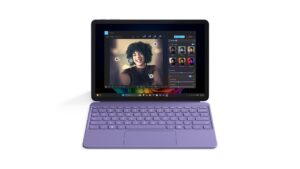
El teclado de 12 pulgadas de Surface Pro reinventado transforma su Surface Pro en una laptop. El nuevo teclado se conecta con facilidad y queda plano para una experiencia de escritura silenciosa y con conexión a tierra. Cuenta con un reposamanos suave y mate para mayor comodidad y durabilidad, un juego de teclas retroiluminado de tamaño completo y un panel táctil de precisión personalizable con modo táctil adaptativo. El nuevo teclado ahora se pliega por completo contra la Surface Pro, para que puedan dibujar o escribir con comodidad. Con teclas dedicadas, como la tecla Copilot y la llave de bloqueo, tienen todas las funciones que necesitan al alcance de su mano. El teclado Surface Pro de 12 pulgadas está disponible en tres hermosos colores nuevos para complementar su teclado Pro: Océano, Violeta y Platino.
Diseñada con la sostenibilidad en mente, la Surface Pro contiene un 82,9% de contenido reciclado en la carcasa y es la primera Pro que contiene un 100% de cobalto reciclado en la celda de la bateríaxii. Pro también está diseñada para ayudar a reducir los desechos electrónicos con muchos componentes diseñados para ser reemplazados por técnicos calificados o proveedores de servicios autorizadosx.
Experiencias de IA habilitadas por la NPU
Más allá de un diseño elegante y portátil, un gran rendimiento y una batería que dura todo el día, los PC Surface Copilot+ desbloquean herramientas de IA que trabajan junto a ustedes para facilitar sus tareas y hacer que los flujos de trabajo sean más eficientes. Con increíbles experiencias de Copilot+ para PC disponibles ahora, y más que continúan implementándosexiii, los nuevos Pro y Laptop los ayudan a satisfacer sus demandas de productividad y creatividad con soluciones impulsadas por IA.
Sus nuevos Surface Pro y Surface Laptop les dan acceso a las experiencias de PC Copilot+ hoy mismo:
Recall (versión preliminar) es una experiencia opcional que transforma la forma en que buscan y vuelven a descubrir contenido en su PC. Ahora pueden volver sobre sus pasos en segundos para encontrar y volver a una aplicación, un sitio web, una imagen o un documento de forma rápida y segura.
Pueden describir con sus propias palabras lo que buscan, y la búsqueda mejorada de Windows revisará imágenes y documentos para encontrarlo por ustedes, ya sea que estén en el Explorador de archivos, el cuadro de búsqueda de Windows o en Configuración.
Con Click to Do (vista previa), pueden identificar texto e imágenes en su pantalla y realizar acciones que aprovechen los modelos de IA locales y basados en la web para ser más productivos mientras se mantienen en su flujo.
Los nuevos Pro y Laptop también son una inversión en el futuro de las experiencias de PC Copilot+, a medida que continuamos con la implementación de las herramientas de IA que necesitan. Las siguientes características estarán disponibles primero para los usuarios de Windows Insider antes de expandirse de manera más amplia:
El nuevo agente en Configuración, que se implementará primero para Windows Insiders, les permitirá describir un problema con sus propias palabras y obtener recomendaciones sobre cómo abordarlo. Con su permiso, incluso puede completar las acciones en su nombre.
Podrán llevar efectos de iluminación de nivel profesional a las imágenes de su PC Copilot+ con Photos Relight.
Nos asociamos de manera continua con nuevos ISV y les damos la bienvenida para que aprovechen las capacidades de nuestra plataforma y el poder de la NPU para beneficiarse de una latencia ultrabaja, un mayor rendimiento y una seguridad mejorada con los datos que permanecen en el dispositivo. Estamos entusiasmados de que Moises Live by Music.AI establezca un nuevo estándar en la separación y el control de audio en tiempo real, como el aislamiento de los volúmenes de percusión, voces y otros elementos, lo que mejora la experiencia de aprendizaje y práctica musical. La experiencia es 35 veces más rápida en la NPU Snapdragon X en comparación con la CPU. Gigapixel AI de Topaz Labs revoluciona la forma en que mejora las imágenes, lo que les permite ampliar y mejorar las imágenes hasta 16 veces su tamaño original mientras mantienen una alta calidad y detalle.
Hay una lista cada vez mayor de aplicaciones con increíbles experiencias de IA que nuestros desarrolladores han creado mediante el aprovechamiento de la NPU, como Capcut, DJay Pro, Davinci Resolve, Camo, Cephable, Liquidtext y muchos más.
Disponibilidad para clientes empresariales
Nos complace anunciar que los nuevos Surface Laptop de 13 pulgadas y Surface Pro de 12 pulgadas se unirán a la familia de PC Surface for Business Copilot+ a partir del 22 de julio en mercados seleccionados.
Diseñados para equipos móviles e híbridos, cuentan con Windows 11 Pro, pantallas antirreflectantes, lector NFC (en Pro) y otras funciones de seguridad y gestión adaptadas a los clientes empresariales. Estas adiciones brindan más opciones en silicio y factores de forma, lo que ayuda a las empresas a encontrar el ajuste perfecto para sus necesidades.
Con una batería de larga duración, un diseño liviano, hermosos colores nuevos y experiencias impulsadas por IA, las nuevas PC Surface Copilot+ son los dispositivos Windows 11 ideales para aquellos con un estilo de vida en movimiento, a un gran valor. Con Windows 10 que llega al final del soporte el 14 de octubre de 2025, Surface Pro, de 12 pulgadas, y Surface Laptop, de 13 pulgadas, son excelentes opciones para garantizar que tengan una experiencia informática moderna, segura y eficiente. Obtengan más información sobre el fin del soporte técnico de Windows 10.
La nueva Surface Pro de 12 pulgadas tiene un precio inicial de $799 y la Surface Laptop de 13 pulgadas tiene un precio inicial de $899 y estará disponible en mercados selectos a partir del 20 de mayo. Pueden hacer un pedido anticipado hoy y obtener más información en Microsoft.com o minoristas clave en todo el mundo como Best Buy (EE. UU.) y Amazon (EE. UU.).
i Snapdragon es una marca comercial o marca comercial registrada de Qualcomm Incorporated. Los productos de la marca Snapdragon son productos de Qualcomm Technologies, Inc. y/o sus subsidiarias.
ii Colores disponibles solo en modelos seleccionados. Los colores, tamaños, acabados y procesadores disponibles pueden variar según la tienda, el mercado y la configuración.
iii Se vende por separado.
iv Comparación basada en Cinebench 24 Multi-Thread que compara el procesador Snapdragon X Plus (8 Core) de Surface Laptop con el procesador Surface Laptop 5 con procesador Intel Core i5.
v Comparación basada en Cinebench 24 Multi-Thread que compara el procesador Snapdragon X Plus (8 Core) de 13″ de Surface Laptop con los procesadores M3 de MacBook Air de 13″.
vi La duración de la batería varía de manera significativa según la configuración, los ajustes y otros factores.
vii Compatible con un cargador USB tipo C PD con una potencia mínima de 45 W o más, se vende por separado.
viii La funcionalidad clave varía según el mercado. Véase aka.ms/keysupport
ix El dispositivo (excluida la fuente de alimentación) contiene un 3,5% de cobalto reciclado, que consiste en un 100% de cobalto reciclado en la celda de la batería. Contiene un 3,1% de contenido reciclado, compuesto por un 90% de acero inoxidable reciclado en el soporte, un 100% de cobre reciclado en PCB, un 100% de metales de tierras raras reciclados en imanes y un 100% de estaño reciclado en la soldadura. Basado en la validación realizada por Underwriters Laboratories, Inc. por medio del Procedimiento de Validación de Declaraciones Ambientales (ECVP) para Contenido Reciclado, UL EVCP-2809-2, Segunda Edición, con fecha 20 de junio de 2024. El contenido reciclado se define de acuerdo con la norma ISO 14201.
x Componentes de repuesto disponibles para reparación fuera de garantía. Herramientas de Microsoft (se vende por separado) también pueden ser necesarias. La disponibilidad y las opciones de servicio pueden variar según el producto, el mercado y el tiempo. Consulten [Información de autorreparación de su dispositivo Surface – Soporte técnico de Microsoft]. Abrir y/o reparar un dispositivo puede presentar descargas eléctricas, daños al dispositivo, riesgo de incendio y lesiones personales, y otros peligros. Tengan cuidado si realizan reparaciones de autoservicio. A menos que lo exija la ley, los daños causados durante la reparación no están cubiertos por la garantía limitada de hardware de Microsoft ni por los planes de protección.
xi Medido el 24 de marzo de 2025. Peso sin incluir teclado o bolígrafo.
xii El recinto incluye cubo, pie de apoyo y bandeja para bolígrafos. Aleación de aluminio 100% reciclado en cubo. Metales de tierras raras 100% reciclados en imanes. El dispositivo (excluida la fuente de alimentación) contiene un 4,7% de cobalto reciclado, que consiste en un 100% de cobalto reciclado en la celda de la batería. Basado en la validación realizada por Underwriter Laboratories, Inc. utilizando el Procedimiento de Validación de Declaraciones Ambientales (ECVP) para Contenido Reciclado, UL ECVP 2809-2, Segunda Edición, con fecha del 20 de junio de 2024. El contenido reciclado se define de acuerdo con la norma ISO 14021.
xiii Las experiencias de Copilot+ para PC varían según el dispositivo y el mercado, y pueden requerir actualizaciones que continúen implementándose hasta 2025; Recall y Click to Do llegarán al Espacio Económico Europeo a finales de 2025. Ver aka.ms/copilotpluspcs
The post Presentamos los nuevos equipos Surface Copilot+: Surface Pro, de 12 pulgadas, y Surface Laptop, de 13 pulgadas appeared first on Source LATAM.