AWS Network Firewall now supports configuring multiple VPC endpoints for a single firewall. This new capability gives you more options to scale your Network Firewall deployment across multiple Amazon Virtual Private Clouds (VPCs), using a centralized security policy.
AWS Network Firewall is a managed, cloud-native firewall service that makes it easy to deploy essential network protections for all your Amazon VPCs. A Network Firewall instance is deployed within a VPC subnet, with a VPC endpoint providing a secure connection to the firewall. Now you can associate up to 50 VPC endpoints per Availability Zone with the firewall and route traffic through the firewall for inspection, reducing operational complexity and lowering costs as you protect more VPCs.
The multiple VPC endpoints feature is supported in all AWS Regions where AWS Network Firewall is available today, including the AWS GovCloud (US) Regions and China Regions.
AWS Network Firewall now supports configuring multiple VPC endpoints for a single firewall. This new capability gives you more options to scale your Network Firewall deployment across multiple Amazon Virtual Private Clouds (VPCs), using a centralized security policy. AWS Network Firewall is a managed, cloud-native firewall service that makes it easy to deploy essential network protections for all your Amazon VPCs. A Network Firewall instance is deployed within a VPC subnet, with a VPC endpoint providing a secure connection to the firewall. Now you can associate up to 50 VPC endpoints per Availability Zone with the firewall and route traffic through the firewall for inspection, reducing operational complexity and lowering costs as you protect more VPCs. The multiple VPC endpoints feature is supported in all AWS Regions where AWS Network Firewall is available today, including the AWS GovCloud (US) Regions and China Regions. You can enable multiple VPC endpoints from the Amazon VPC Console or the Network Firewall API. To learn more about this feature and pricing, please see the AWS Network Firewall product page and service documentation.
Amazon FSx for NetApp ONTAP, a service that provides fully managed shared storage built on NetApp’s popular ONTAP file system, now supports write-back mode for ONTAP FlexCache volumes. Write-back mode is a new ONTAP capability that helps you achieve faster performance for your write-intensive workloads that are distributed across multiple AWS Regions and on-premises file systems.
FlexCache is an ONTAP caching technology that enables distributed access to data. Previously, FlexCache only supported write-around mode, where every write operation to a FlexCache volume had to go back to the origin volume before it was acknowledged, increasing write latency. Starting today, FSx for ONTAP now supports the new write-back mode for FlexCache. Write-back mode improves the performance of write-heavy workloads by caching writes locally on FlexCache volumes and asynchronously updating the origin volume, reducing write latency. You can now use write-back mode to improve write performance for write-intensive distributed applications such as collaborative content creation, distributed databases, and engineering workflows that need to operate across multiple AWS Regions or between cloud and on-premises environments.
Starting today, you can enable FlexCache write-back mode at no additional cost on all FSx for ONTAP file systems in all AWS Regions where the service is available. For more information, refer to the FSx for ONTAP User Guide.
Amazon FSx for NetApp ONTAP, a service that provides fully managed shared storage built on NetApp’s popular ONTAP file system, now supports write-back mode for ONTAP FlexCache volumes. Write-back mode is a new ONTAP capability that helps you achieve faster performance for your write-intensive workloads that are distributed across multiple AWS Regions and on-premises file systems. FlexCache is an ONTAP caching technology that enables distributed access to data. Previously, FlexCache only supported write-around mode, where every write operation to a FlexCache volume had to go back to the origin volume before it was acknowledged, increasing write latency. Starting today, FSx for ONTAP now supports the new write-back mode for FlexCache. Write-back mode improves the performance of write-heavy workloads by caching writes locally on FlexCache volumes and asynchronously updating the origin volume, reducing write latency. You can now use write-back mode to improve write performance for write-intensive distributed applications such as collaborative content creation, distributed databases, and engineering workflows that need to operate across multiple AWS Regions or between cloud and on-premises environments. Starting today, you can enable FlexCache write-back mode at no additional cost on all FSx for ONTAP file systems in all AWS Regions where the service is available. For more information, refer to the FSx for ONTAP User Guide.
Cost Optimization Hub, a feature within the Billing and Cost Management Console, now allows you to configure preferred Savings Plans and reservation term and payment options preferences, so you can see your resulting recommendations and savings potential based on your preferred commitments.
Cost Optimization Hub allows you to easily identify, filter, and aggregate AWS cost optimization recommendations, such as EC2 instance rightsizing recommendations, graviton recommendations, idle recommendations, reservations recommendations and Savings Plans recommendations. By providing new preferences, you can now select 1 or 3 year term lengths, as well as All upfront, Partial upfront, and No upfront payment options. This helps align the savings potential with your organization’s preferred commitment settings, giving you even more accurate potential savings.
Cost Optimization Hub is available at no additional charge in all AWS Regions, except for the AWS China Regions and AWS GovCloud (US) Regions.
You can start using Cost Optimization Hub and the new Preferences options through the AWS Management Console, AWS CLI, or AWS SDK. Visit product details page and user guides to learn more.
Cost Optimization Hub, a feature within the Billing and Cost Management Console, now allows you to configure preferred Savings Plans and reservation term and payment options preferences, so you can see your resulting recommendations and savings potential based on your preferred commitments. Cost Optimization Hub allows you to easily identify, filter, and aggregate AWS cost optimization recommendations, such as EC2 instance rightsizing recommendations, graviton recommendations, idle recommendations, reservations recommendations and Savings Plans recommendations. By providing new preferences, you can now select 1 or 3 year term lengths, as well as All upfront, Partial upfront, and No upfront payment options. This helps align the savings potential with your organization’s preferred commitment settings, giving you even more accurate potential savings. Cost Optimization Hub is available at no additional charge in all AWS Regions, except for the AWS China Regions and AWS GovCloud (US) Regions. You can start using Cost Optimization Hub and the new Preferences options through the AWS Management Console, AWS CLI, or AWS SDK. Visit product details page and user guides to learn more.
Amazon DocumentDB (with MongoDB compatibility) announces an updated Service Level Agreement (SLA), promising a 99.99% availability when using a Multi-Availability Zone (Multi-AZ) configuration. Previously, Amazon DocumentDB offered a 99.9% SLA. Now, Amazon DocumentDB has updated the SLA to 99.99%, increasing our commitment to service availability.
Amazon DocumentDB (with MongoDB compatibility) is a fully managed native JSON document database that makes it easy and cost effective to operate critical document workloads at virtually any scale without managing infrastructure. The updated SLA for Amazon DocumentDB applies to all regions where DocumentDB is generally available, at no additional cost. To learn more about Amazon DocumentDB, please see our product page and documentation.
Amazon DocumentDB (with MongoDB compatibility) announces an updated Service Level Agreement (SLA), promising a 99.99% availability when using a Multi-Availability Zone (Multi-AZ) configuration. Previously, Amazon DocumentDB offered a 99.9% SLA. Now, Amazon DocumentDB has updated the SLA to 99.99%, increasing our commitment to service availability. Amazon DocumentDB (with MongoDB compatibility) is a fully managed native JSON document database that makes it easy and cost effective to operate critical document workloads at virtually any scale without managing infrastructure. The updated SLA for Amazon DocumentDB applies to all regions where DocumentDB is generally available, at no additional cost. To learn more about Amazon DocumentDB, please see our product page and documentation.
AWS Backup now offers enhanced Amazon EC2 restore capability that allows you to customize volume configurations during the restoration process. This new feature enables users to specify custom settings for all the attached Amazon EBS volumes to an EC2 AMI, including volume type, size, IOPS, AWS KMS encryption keys and others, directly through AWS Backup. The capability works seamlessly for restores from standard backup vaults and logically air-gapped vaults.
You can start using this feature through the AWS Backup CLI, or SDK. During EC2 backup restoration, you can now include a new section (block device mappings) in your restore metadata to configure Amazon EBS volume settings. You can also specify additional volumes in the block device mappings to attach when launching the instance. The enhancement applies to both existing and new EC2 backups and is available at no extra cost.
AWS Backup support for enhanced EC2 restores is available in all commercial Regions, where AWS Backup is supported. To learn more about AWS Backup support for this feature, visit the AWS Backup product documentation.
AWS Backup now offers enhanced Amazon EC2 restore capability that allows you to customize volume configurations during the restoration process. This new feature enables users to specify custom settings for all the attached Amazon EBS volumes to an EC2 AMI, including volume type, size, IOPS, AWS KMS encryption keys and others, directly through AWS Backup. The capability works seamlessly for restores from standard backup vaults and logically air-gapped vaults. You can start using this feature through the AWS Backup CLI, or SDK. During EC2 backup restoration, you can now include a new section (block device mappings) in your restore metadata to configure Amazon EBS volume settings. You can also specify additional volumes in the block device mappings to attach when launching the instance. The enhancement applies to both existing and new EC2 backups and is available at no extra cost. AWS Backup support for enhanced EC2 restores is available in all commercial Regions, where AWS Backup is supported. To learn more about AWS Backup support for this feature, visit the AWS Backup product documentation.
Today, AWS announces the launch of the Amazon Neptune MCP Server, now available in the AWS MCP open-source repository. This new server makes it easier for developers and AI assistants to interact with Amazon Neptune, enabling seamless integration of graph queries into generative AI workflows.
Part of AWS’s growing suite of Model Context Protocol (MCP) tools, the Neptune MCP Server supports openCypherand Gremlin queries, schema discovery, and natural language querying. Users can now seamlessly integrate Neptune into MCP capable tools like Amazon Q CLI, Cursor, Claude Code, as well as the ability to ask questions in plain English and receive accurate graph responses—without writing complex code. Whether you’re building a knowledge graph, analyzing relationships, or powering an AI assistant, the Neptune MCP Server lets you explore and query graph data more intuitively and efficiently than ever before.
Amazon Neptune MCP Server is now available in all AWS regions where Amazon Neptune is offered. For more details, learn more about Neptune MCP Server on our blog.
Today, AWS announces the launch of the Amazon Neptune MCP Server, now available in the AWS MCP open-source repository. This new server makes it easier for developers and AI assistants to interact with Amazon Neptune, enabling seamless integration of graph queries into generative AI workflows. Part of AWS’s growing suite of Model Context Protocol (MCP) tools, the Neptune MCP Server supports openCypher and Gremlin queries, schema discovery, and natural language querying. Users can now seamlessly integrate Neptune into MCP capable tools like Amazon Q CLI, Cursor, Claude Code, as well as the ability to ask questions in plain English and receive accurate graph responses—without writing complex code. Whether you’re building a knowledge graph, analyzing relationships, or powering an AI assistant, the Neptune MCP Server lets you explore and query graph data more intuitively and efficiently than ever before. Amazon Neptune MCP Server is now available in all AWS regions where Amazon Neptune is offered. For more details, learn more about Neptune MCP Server on our blog.
Amazon Elastic Compute Cloud (Amazon EC2) C8gd instances, M8gd instances, and R8gd instances with up to 11.4 TB of local NVMe-based SSD block-level storage are now available in AWS Regions Europe (Spain) and Asia Pacific (Tokyo). These instances are powered by AWS Graviton4 processors, delivering up to 30% better performance over Graviton3-based instances. They have up to 40% higher performance for I/O intensive database workloads, and up to 20% faster query results for I/O intensive real-time data analytics than comparable AWS Graviton3-based instances. These instances are built on the AWS Nitro System and are a great fit for applications that need access to high-speed, low latency local storage.
Each instance is available in 12 different sizes. They provide up to 50 Gbps of network bandwidth and up to 40 Gbps of bandwidth to the Amazon Elastic Block Store (Amazon EBS). Additionally, customers can now adjust the network and Amazon EBS bandwidth on these instances by 25% using EC2 instance bandwidth weighting configuration, providing greater flexibility with the allocation of bandwidth resources to better optimize workloads. These instances offer Elastic Fabric Adapter (EFA) networking on 24xlarge, 48xlarge, metal-24xl, and metal-48xl sizes.
These instances are now available in AWS Regions US East (Ohio, N. Virginia), US West (Oregon), Europe (Frankfurt, Spain), and Asia Pacific (Tokyo).
Amazon Elastic Compute Cloud (Amazon EC2) C8gd instances, M8gd instances, and R8gd instances with up to 11.4 TB of local NVMe-based SSD block-level storage are now available in AWS Regions Europe (Spain) and Asia Pacific (Tokyo). These instances are powered by AWS Graviton4 processors, delivering up to 30% better performance over Graviton3-based instances. They have up to 40% higher performance for I/O intensive database workloads, and up to 20% faster query results for I/O intensive real-time data analytics than comparable AWS Graviton3-based instances. These instances are built on the AWS Nitro System and are a great fit for applications that need access to high-speed, low latency local storage. Each instance is available in 12 different sizes. They provide up to 50 Gbps of network bandwidth and up to 40 Gbps of bandwidth to the Amazon Elastic Block Store (Amazon EBS). Additionally, customers can now adjust the network and Amazon EBS bandwidth on these instances by 25% using EC2 instance bandwidth weighting configuration, providing greater flexibility with the allocation of bandwidth resources to better optimize workloads. These instances offer Elastic Fabric Adapter (EFA) networking on 24xlarge, 48xlarge, metal-24xl, and metal-48xl sizes. These instances are now available in AWS Regions US East (Ohio, N. Virginia), US West (Oregon), Europe (Frankfurt, Spain), and Asia Pacific (Tokyo). To learn more, see Amazon C8gd instances, Amazon M8gd Instances, and Amazon R8gd Instances. To learn how to migrate your workloads to AWS Graviton-based instances, see the Getting started with Graviton.
Amazon CloudWatch Synthetics now supports the Java programming language for authoring canaries, enabling developers to write monitoring scripts using the Java 21 runtime environment. This new runtime, syn-java-1.0, allows customers to leverage existing Java expertise to continuously monitor the availability and performance of their services and applications using CloudWatch Synthetics.
With Java support, customers can now bring their existing Java-based tests—often used in integration pipelines—into production environments as part of their synthetic monitoring strategy. These canaries support modular step execution with built-in metric generation, queryable logs using the canaryRunId, and optional X-Ray tracing to visualize request paths across services. The Java runtime is designed for non-browser use cases, making canaries lightweight and faster and letting customers bring their own libraries and frameworks suited to their differentiated monitoring needs. Customers can use Java build tools like Maven or Gradle to package their monitoring code—along with a synthetics.json configuration file—into a deployable ZIP artifact, which can then be used with the Synthetics APIs, SDKs, or infrastructure-as-code tools such as Terraform and CloudFormation for deploying canaries.
The Java runtime is now available in all commercial AWS Regions where CloudWatch Synthetics is supported. Visit this page to learn more about the features and support policy for the Java runtime, or visit CloudWatch Synthetics user guide to create your first canary today.
Amazon CloudWatch Synthetics now supports the Java programming language for authoring canaries, enabling developers to write monitoring scripts using the Java 21 runtime environment. This new runtime, syn-java-1.0, allows customers to leverage existing Java expertise to continuously monitor the availability and performance of their services and applications using CloudWatch Synthetics. With Java support, customers can now bring their existing Java-based tests—often used in integration pipelines—into production environments as part of their synthetic monitoring strategy. These canaries support modular step execution with built-in metric generation, queryable logs using the canaryRunId, and optional X-Ray tracing to visualize request paths across services. The Java runtime is designed for non-browser use cases, making canaries lightweight and faster and letting customers bring their own libraries and frameworks suited to their differentiated monitoring needs. Customers can use Java build tools like Maven or Gradle to package their monitoring code—along with a synthetics.json configuration file—into a deployable ZIP artifact, which can then be used with the Synthetics APIs, SDKs, or infrastructure-as-code tools such as Terraform and CloudFormation for deploying canaries. The Java runtime is now available in all commercial AWS Regions where CloudWatch Synthetics is supported. Visit this page to learn more about the features and support policy for the Java runtime, or visit CloudWatch Synthetics user guide to create your first canary today.
Por: Adam Bogobowicz, director de marketing de productos de transformación industrial.
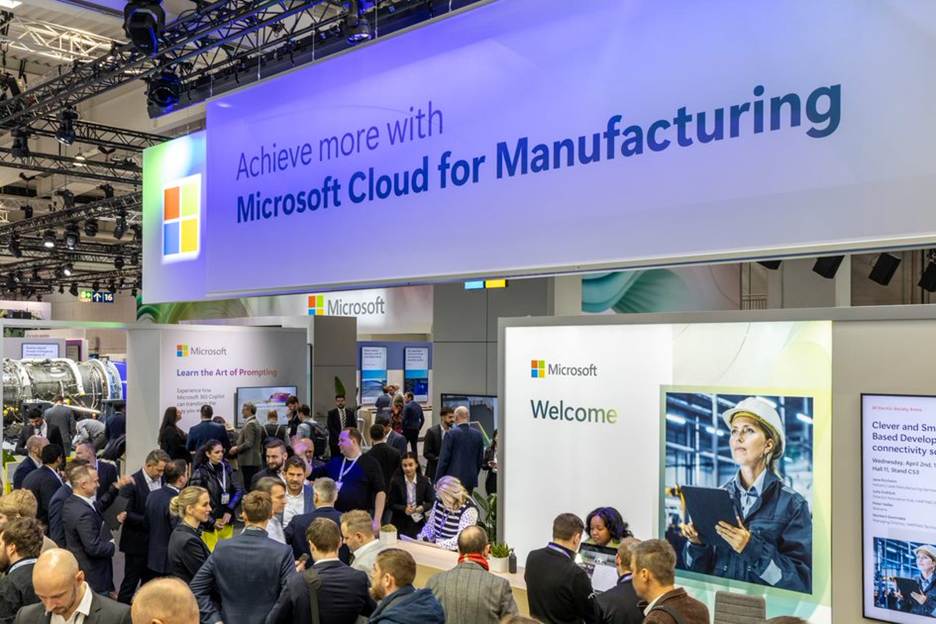
Hannover Messe es el evento para ver la innovación en la fabricación. Este año, 127 mil líderes empresariales y gubernamentales de 150 países se reunieron para ver cómo la tecnología da forma al futuro. Una vez más, Microsoft mostró avances en IA y tecnologías en la nube, donde subrayó su compromiso con la transformación en curso dentro de la industria de la manufactura. Junto con clientes y socios, la presencia de Microsoft destacó la «IA industrial en acción» con demostraciones y liderazgo de pensamiento centrado en el diseño generativo, la eficiencia de la fábrica y las operaciones de primera línea.
A través de 31 demostraciones, 53 sesiones en auditorio y tres eventos auxiliares, Microsoft destacó cómo los agentes de IA ayudan a los fabricantes a desbloquear nuevos niveles de productividad, resiliencia y crecimiento. Como la nueva interfaz para los datos y las operaciones industriales, las herramientas de IA generativa permiten a todos los trabajadores, desde la fábrica hasta la sala de juntas, sacar a la luz información oportuna y relevante que impulsa la toma de decisiones. Prueben los agentes creados con la potencia de Microsoft Copilot Studio para ustedes mismos.
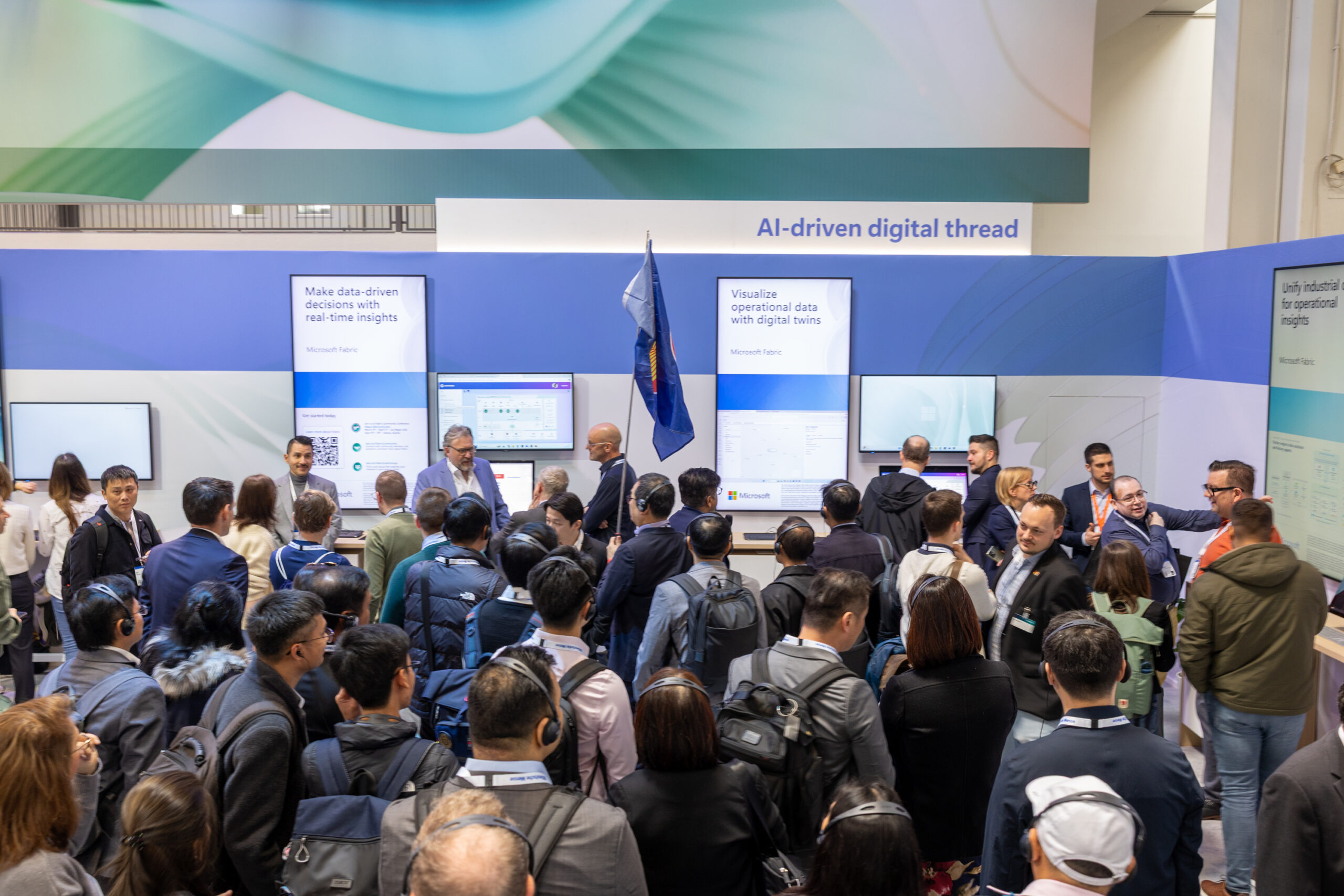
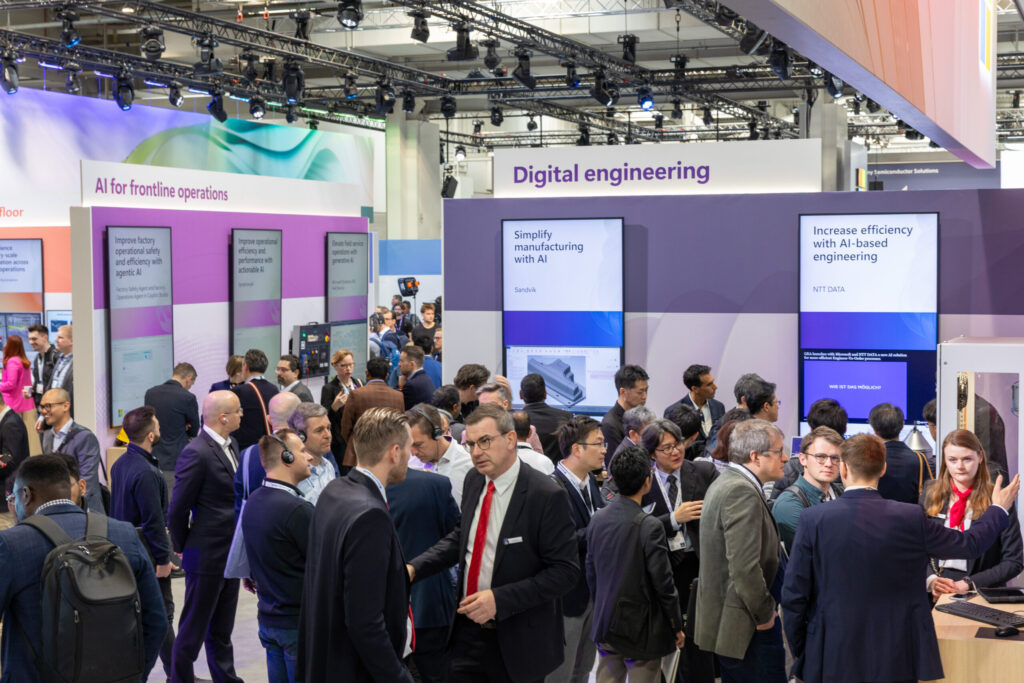
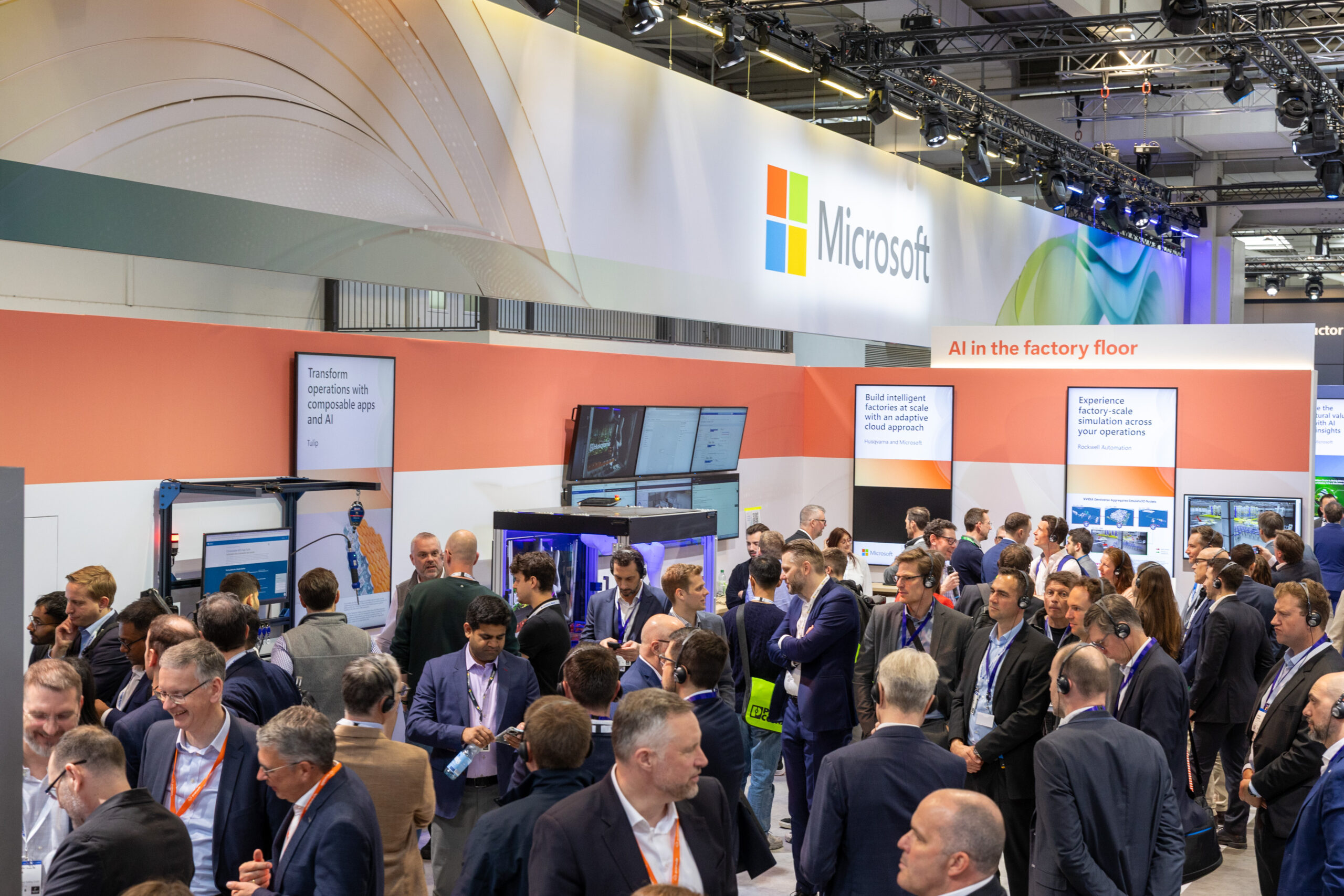
En el stand, Microsoft se centró en toda la cadena de valor de la fabricación: avanzar en la innovación en ingeniería digital con IA generativa, preparar el entorno de la fábrica para la IA, los agentes de IA que apoyan el desarrollo de los trabajadores de primera línea y, por último, hacer realidad los hilos digitales inteligentes. Microsoft dio vida a estas cuatro oportunidades a través de cuatro vecindarios distintos llenos de demostraciones, socios e historias de clientes. Entre las colaboraciones más destacadas se encuentran las colaboraciones con Rolls-Royce, Siemens, PTC, Sandvik, Husqvarna, Sight Machine, Sanctuary AI, SymphonyAI, Bridgestone y Databricks. La presencia de Microsoft en Hannover atrajo una increíble atención de los medios de comunicación, en particular varias entrevistas en canales de noticias con Anges Heftberger, CEO de Microsoft Alemania, y una visita de Roland Busch, CEO de Siemens AG.
Este año, la pieza central de Microsoft mostró el recorrido de transformación de Rolls-Royce desde la ingeniería de diseño hasta las operaciones de mantenimiento a través de la fábrica. Durante más de un siglo, Rolls-Royce ha sido una fuerza para el progreso; para impulsar, proteger y conectar a las personas en todas partes. Hoy, con la transformación digital a la vanguardia, la compañía redefine cómo se diseñan, construyen y mantienen sus productos de clase mundial. Con la ayuda de Siemens y Microsoft, Rolls-Royce utiliza ahora la IA para agilizar la producción, aumentar la eficiencia del motor y predecir las necesidades de mantenimiento antes de que surjan problemas.
Hacer realidad los hilos digitales inteligentes
Basados en datos unificados de operaciones (OT, por sus siglas en inglés), información empresarial (TI, por sus siglas en inglés) e ingeniería (ET, por sus siglas en inglés), los hilos digitales conectan todas las fases de la fabricación, para brindar información oportuna y procesable a cada equipo, desde el diseño y la producción hasta el mantenimiento y la atención al cliente. Este flujo continuo y conectado de datos enriquece cada etapa de la cadena de valor de fabricación.
Sin una base de datos sólida, los fabricantes tendrán dificultades para aprovechar todo el potencial de la IA. La calidad, la estandarización y la integración de los datos suelen ser incoherentes, lo que dificulta el acceso y la confianza en la información. Microsoft Fabric ayuda a los fabricantes a superar estas barreras, para convertir los datos fragmentados en hilos digitales inteligentes que impulsan mejores decisiones, una innovación más rápida y excelencia operativa. Junto con las demostraciones de Fabric y Microsoft Dynamics 365, los socios de Microsoft AVEVA, Databricks, Kongsberg y Parsec mostraron cómo la IA influye en la supervisión de la producción en tiempo real y el mantenimiento predictivo para impulsar la fabricación resistente, eficiente y sostenible.
Ingeniería con IA generativa
La IA revoluciona el diseño y la ingeniería, para desbloquear nuevos niveles de innovación, velocidad y creatividad. Con la IA generativa, los fabricantes ahora pueden explorar con rapidez una amplia gama de posibilidades, para optimizar los productos para el rendimiento, la capacidad de fabricación y el costo. Los socios de Microsoft, PTC, Sandvik, Schneider Electric, Eplan, Rescale y NTT DATA, demostraron aplicaciones del mundo real de la IA que remodelan el desarrollo de productos y el ciclo de vida, desde iteraciones de diseño aceleradas hasta simulaciones predictivas. El resultado son productos de mayor rendimiento y más centrados en el cliente, que se lanzan al mercado de forma más rápida y eficiente.
Preparación del entorno de la fábrica para la IA
La IA redefine las operaciones de las fábricas. Los fabricantes deben integrar las soluciones de entorno industrial con la nube para capitalizar por completo sus inversiones en el piso de producción. El enfoque de nube adaptativa de Microsoft Azure captura datos de activos y dispositivos de equipos industriales, para normalizarlos en el entorno y enviar información a la nube y viceversa. Junto con los socios Accenture Avanade, Cognite, Litmus, Schneider Electric, Sight Machine, Rockwell y Tulip, Microsoft mostró cómo la IA en el entorno transforma la visibilidad de la fábrica en tiempo real y la supervisión del rendimiento.
Apoyo a los trabajadores de primera línea con agentes de IA
La transformación de la IA remodela todos los aspectos de las operaciones de la industria de la manufactura. A medida que la industria lidia con una alta rotación, la mejora de las habilidades de la fuerza laboral se ha convertido en un desafío crítico. Los agentes de IA ahora brindan a los trabajadores de primera línea orientación en tiempo real para ayudarlos a tomar decisiones más rápidas y mejor informadas. Los agentes impulsados por IA optimizan los entornos industriales, lo que permite a los operadores, los equipos de producción y los gerentes de instalaciones acceder a información y optimizar los procesos a través de interacciones en lenguaje natural. Al acelerar la resolución de problemas y el análisis de la causa raíz, el agente mejora la productividad diaria y la resiliencia operativa. Además de las demostraciones de Microsoft 365 Copilot y Microsoft Dynamics 365 Field Service, los socios Sanctuary AI y SymphonyAI destacaron cómo la IA y la automatización redefinen el futuro del trabajo de primera línea.
Impulsar el liderazgo en IA y la innovación de la industria
El teatro de Microsoft estuvo lleno este año. Trasladado al stand, este espacio conectó a líderes empresariales, innovadores y clientes con los expertos, para crear un foro que permitiera discutir los desafíos únicos que enfrenta la manufactura y cómo las tecnologías de IA y en la nube ayudan a abordarlos. Estos son algunos de los aspectos más destacados del teatro:
«Celebrar a las mujeres en la manufactura» reunió a voces femeninas influyentes en la industria de la manufactura para explorar sus trayectorias profesionales, logros, desafíos y consejos para inspirar a la próxima generación de talentos. Gracias a las panelistas Elise Hersko, Sandra Anderstedt y Monica Ugwi.
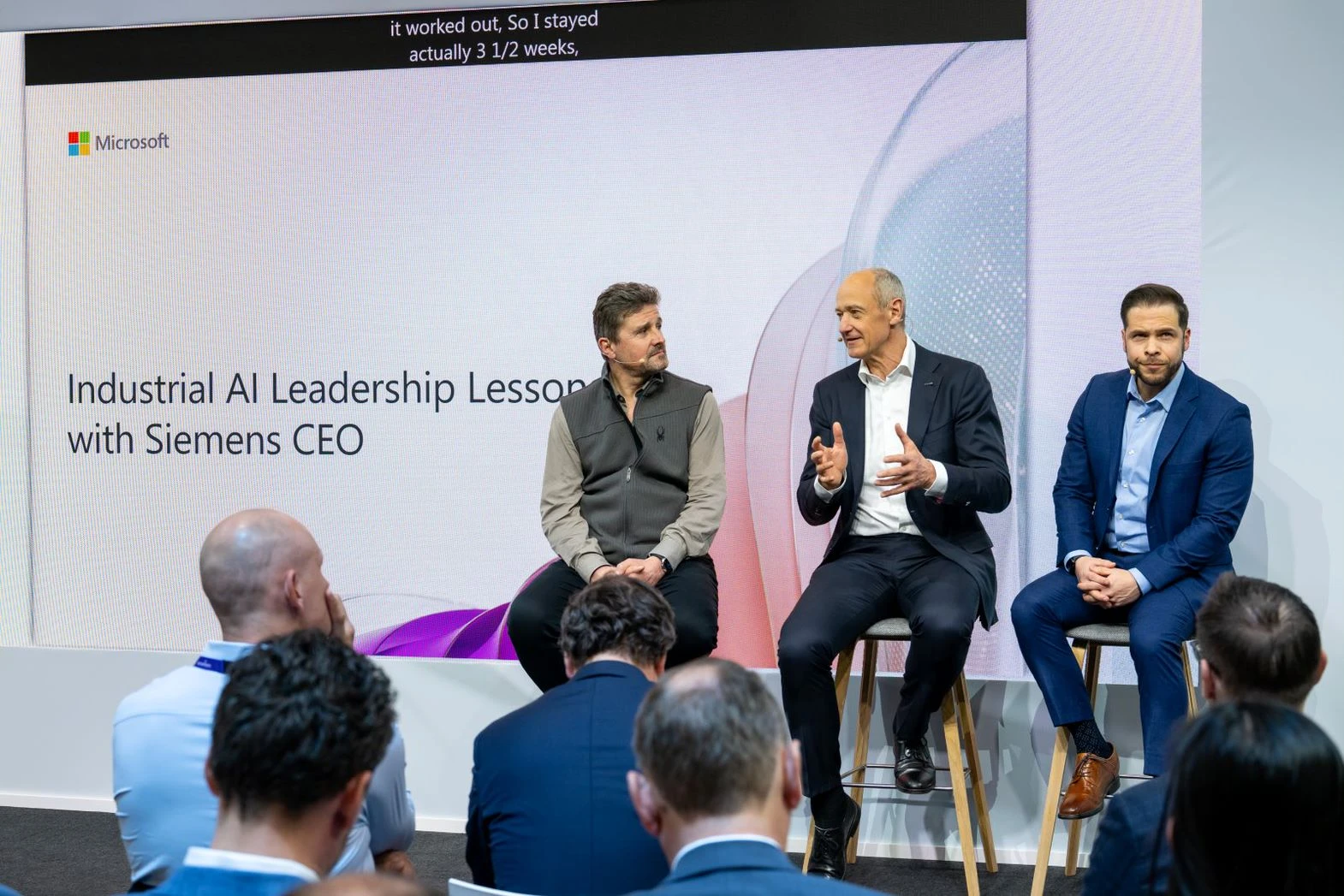
Una conversación sobre el liderazgo de la IA industrial entre Roland Busch, CEO de Siemens, y Uli Homann, CVP de Cloud e IA de Microsoft, quienes compartieron sus aprendizajes sobre el liderazgo en IA. Ambos coincidieron en que el éxito depende de un ecosistema de datos fiable, de prácticas de IA responsables y del compromiso de ampliar las iniciativas de IA que empiezan por el cliente.
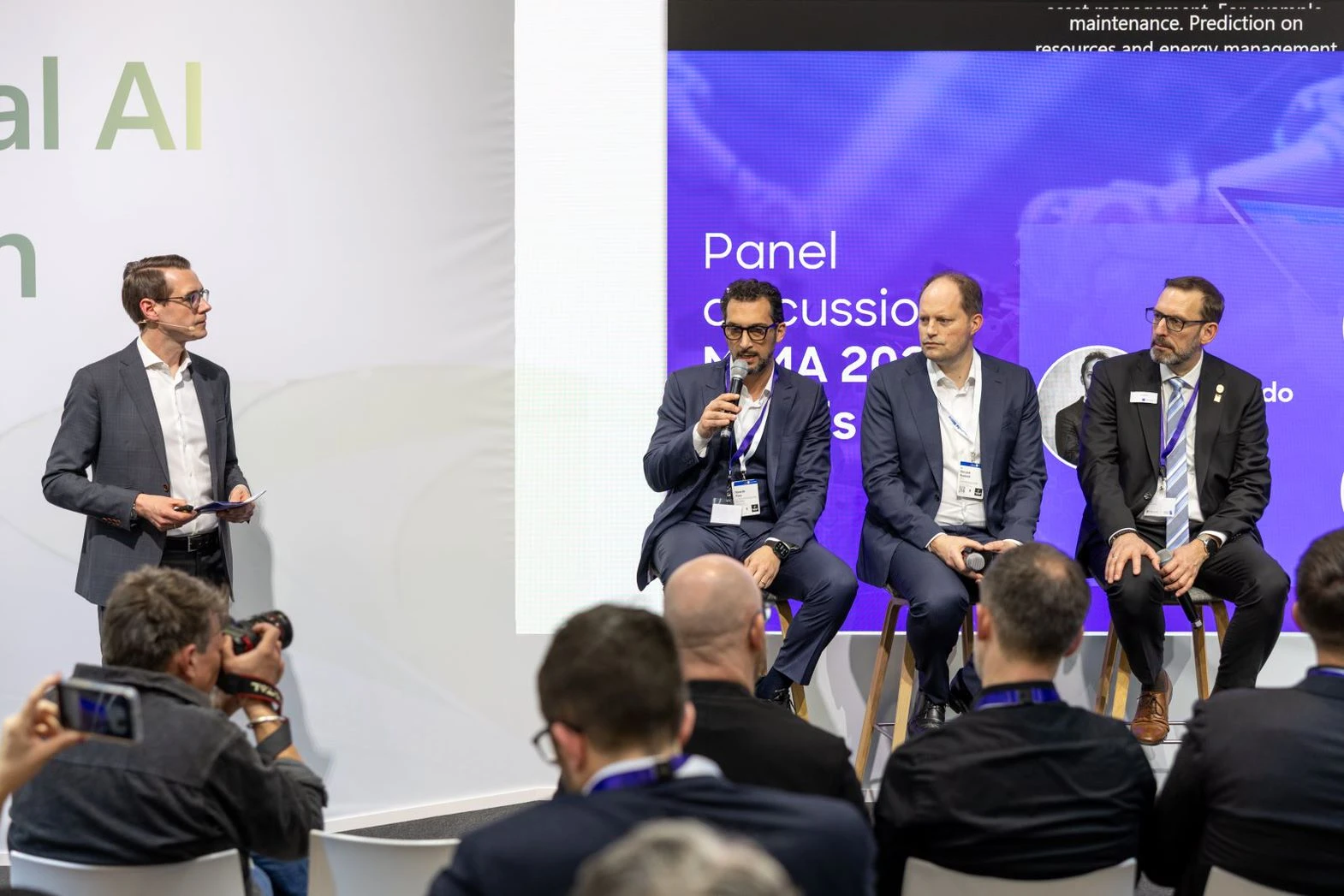
La presentación del Microsoft Intelligent Manufacturing Award (MIMA), en colaboración con Roland Berger, celebró a los ganadores del MIMA, que reconoce la innovación en la fabricación inteligente en Europa, Oriente Medio y África. Entre los ganadores de 2025 se encuentran Continental, Diehl Metering, Philip Morris Manufacturing & Technology, ZEISS Digital Innovation, además de Cereal Docks y MIPU.
Desbloquear nuevas posibilidades con Microsoft
Gracias a los clientes, socios y a los miles de asistentes que interactuaron con el stand de Microsoft durante toda la semana. Esperamos con ansias HANNOVER MESSE 2026.
Today, AWS announces the release of Neuron 2.23, featuring enhancements across inference, training capabilities, and developer tools. This release moves the NxD Inference library (NxDI) to general availability (GA), introduces new training capabilities including Context Parallelism and ORPO, and adds support for PyTorch 2.6 and JAX 0.5.3.
The NxD Inference library moves from beta to general availability, now recommended for all multi-chip inference use-cases. Key enhancements include Persistent Cache support to reduce compilation times and optimized model loading time.
For training workloads, the NxD Training library introduces Context Parallelism support (beta) for Llama models, enabling sequence lengths up to 32K. The release adds support for model alignment using ORPO with DPO-style datasets, upgraded support for 3rd party libraries, specifically: PyTorch Lightning 2.5, Transformers 4.48, and NeMo 2.1.
The Neuron Kernel Interface (NKI) introduces new 32-bit integer operations, improved ISA features for Trainium2, and new performance tuning APIs. The Neuron Profiler now offers 5x faster profile result viewing, timeline-based error tracking, and improved multiprocess visualization with Perfetto.
AWS Neuron SDK supports training and deploying models on Trn1, Trn2, and Inf2 instances, available in AWS Regions as On-Demand Instances, Reserved Instances, Spot Instances, or part of Savings Plan.
For a full list of new features and enhancements in Neuron 2.23 and to get started with Neuron, see:
Today, AWS announces the release of Neuron 2.23, featuring enhancements across inference, training capabilities, and developer tools. This release moves the NxD Inference library (NxDI) to general availability (GA), introduces new training capabilities including Context Parallelism and ORPO, and adds support for PyTorch 2.6 and JAX 0.5.3. The NxD Inference library moves from beta to general availability, now recommended for all multi-chip inference use-cases. Key enhancements include Persistent Cache support to reduce compilation times and optimized model loading time. For training workloads, the NxD Training library introduces Context Parallelism support (beta) for Llama models, enabling sequence lengths up to 32K. The release adds support for model alignment using ORPO with DPO-style datasets, upgraded support for 3rd party libraries, specifically: PyTorch Lightning 2.5, Transformers 4.48, and NeMo 2.1. The Neuron Kernel Interface (NKI) introduces new 32-bit integer operations, improved ISA features for Trainium2, and new performance tuning APIs. The Neuron Profiler now offers 5x faster profile result viewing, timeline-based error tracking, and improved multiprocess visualization with Perfetto. AWS Neuron SDK supports training and deploying models on Trn1, Trn2, and Inf2 instances, available in AWS Regions as On-Demand Instances, Reserved Instances, Spot Instances, or part of Savings Plan. For a full list of new features and enhancements in Neuron 2.23 and to get started with Neuron, see: